


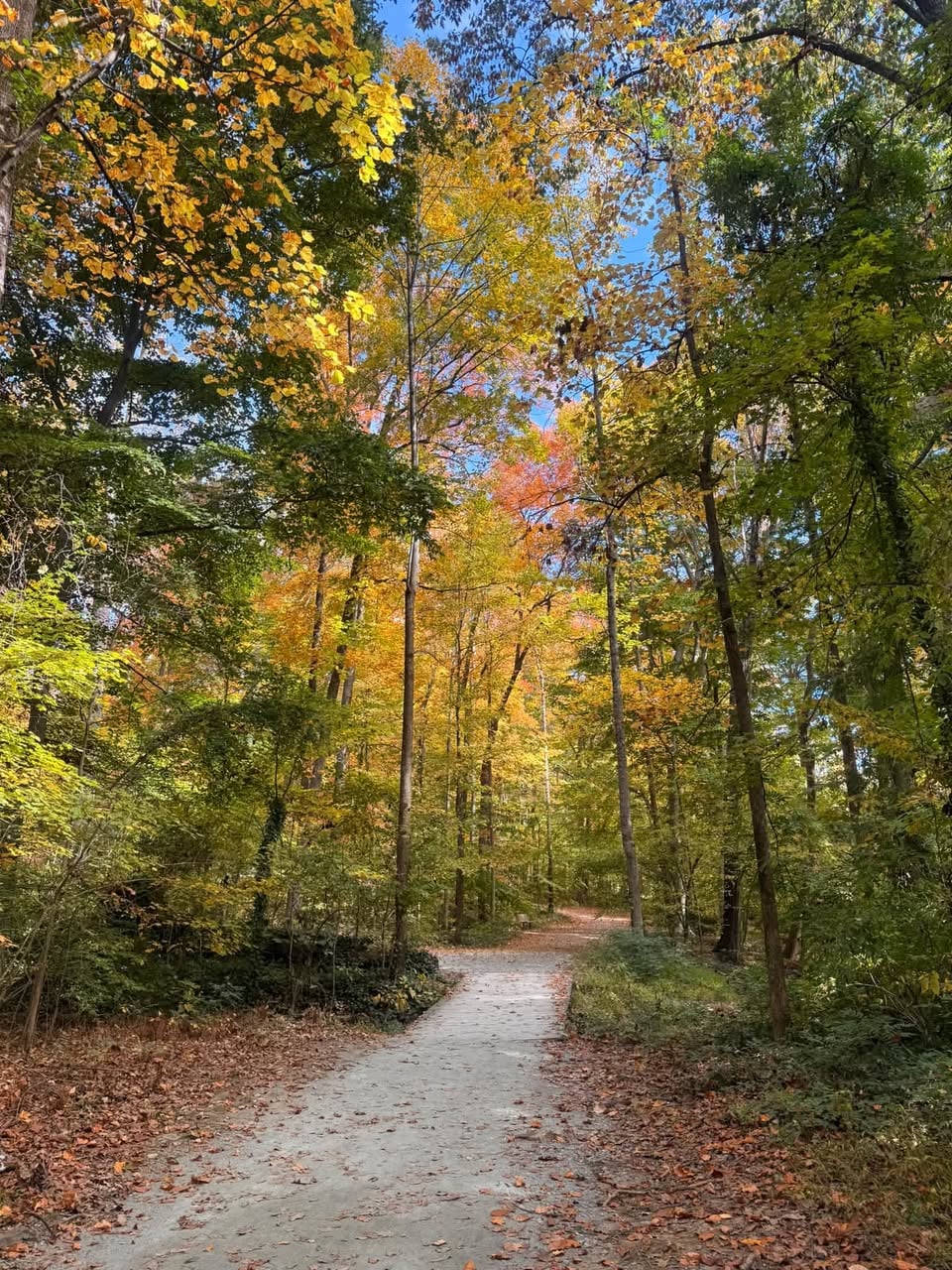
Living in Hamilton Lakes: An Insider’s Take
AI Summary / Quick Answer:
Living in Hamilton Lakes offers a rare blend of historic character, custom-built 1950s architecture, and private nature trails in West Greensboro, NC. Governed by the private nonprofit Hamilton Lakes Parks, Inc. (HLPI) rather than a standard HOA, the neighborhood features quiet lake access, mature tree canopies, and median home values ranging from $500,000 to $530,000 (with lakefront estates exceeding $1M). While it provides a secluded, nature-rich retreat just minutes from Friendly Center and downtown Greensboro, buyers must navigate older infrastructure, seasonal leaf management, and dual membership structures.
If you’ve spent any time looking at real estate in West Greensboro, you’ve heard the hype about Hamilton Lakes. The glossy real estate brochures sell it as a picture-perfect lakeside paradise where time stands still under a canopy of historic oak trees.
While it’s easily one of the most desirable pockets in town, living here isn’t a pristine fairytale, it’s a distinct lifestyle with its own unwritten rules, seasonal headaches, and incredible perks.
Here is what living in Hamilton Lakes is actually like from someone who knows the neighborhood, the quirks, and the trade-offs.
The Insider Reality:
What Life Here Actually Looks Like
1. The Lake Association is the Real Neighborhood Hub Unlike standard subdivisions governed by a strict HOA, Hamilton Lakes operates around HLPI (Hamilton Lakes Parks, Inc.). It’s a private nonprofit run by residents that owns the lakes, trails, and surrounding green spaces.
The Catch: Buying a house here doesn't automatically grant you trail or water access. You have to buy an annual permit.
The Benefit: Because the trails are private, they stay quiet, clean, and uncrowded compared to public city parks like Bur-Mil or Country Park.
The Quirk: If you walk the trails without a visible membership tag on your dog's leash or your jacket, expect a polite resident to eventually ask if you’re a member.
2. You Become an Accidental Weather Watcher Because the neighborhood is built inside a heavily wooded watershed, the weather dictates your weekend plans:
Fall is a part-time job: The leaf drop here is staggering. You’ll either spend thousands on seasonal yard services or invest in a commercial leaf blower and surrender every Saturday in November.
Rainstorms get dramatic: Low-lying lots near the water turn into temporary marshland after a heavy Carolina downpour.
Power Outages: When high winds hit Greensboro, the massive tree canopy takes down power lines faster than in newer neighborhoods with underground utilities. Keeping a generator or backup battery handy is a rite of passage.
3. The Daily Rhythm: Friendly Center & Dog Walking Life here settles into a very specific daily routine. Mornings and early evenings belong to dog owners, runners, and stroller-pushing parents on the lake loops—most people learn the dogs' names long before they learn the owners'.
By midday, everyone runs the "Friendly Center Circuit." Having Target, Harris Teeter, and local spots just three minutes away makes quick errands effortless. The only downside? Navigating peak holiday shopping traffic on Friendly Avenue requires learning back-road shortcuts.
The Pros & Cons: Weighing the Trade-Offs
The Pros
Private Nature Access: Having quiet walking trails, non-motorized boating, and fishing right outside your front door for a modest trail permit fee ($85/year) is a rare luxury in Greensboro.
Unbeatable Location: You get the feel of a secluded mountain woods retreat while sitting less than 5 minutes from shopping and 10 minutes from downtown Greensboro.
Character-Rich Homes: Built out gradually over nearly a century, the neighborhood features custom architecture and large, wooded lots rather than cookie-cutter houses.
Rock-Solid Property Values: Homes here consistently hold value. Median prices sit solidly in the $500,000–$530,000 range, with renovated, lake-adjacent estates routinely clearing $800,000 to $1M+.
Strong Community Roots: Between the lake trails and the nearby Hamilton Lakes Swim & Tennis Club, it’s extremely easy to build a local social circle.
The Cons
Aging Infrastructure: Most homes were built between the 1950s and 1970s. Unless a previous owner gutted the house, you’re taking on 1950s cast-iron pipes, outdated panels, low ceilings, and choppy floor plans.
The Tree Canopy Tax: The canopy that gives the neighborhood its charm brings constant moss, gutter clearing, dampness, and falling branch risks during ice or wind storms.
Drainage & Moisture: High water tables mean crawlspace encapsulation, sump pumps, and moisture mitigation are regular topics of conversation among neighbors.
Confusing Dual Memberships: Buyers often confuse the two local organizations: Hamilton Lakes & Parks, Inc. (the $85/yr trail/lake permit) is totally separate from the Hamilton Lakes Swim & Tennis Club, which requires a steep initiation fee and annual dues (~$1,000–$1,500/yr for families).
Zero Walkable Nightlife: While shopping centers are a 3-minute drive away, the neighborhood itself is strictly residential you can't walk to a corner coffee shop or pub from your front porch. However, you can take a beautiful sunset walk on a trail.
The Verdict
Hamilton Lakes isn't for buyers looking for a low-maintenance, turn-key suburban house with a flat, sun-drenched lawn. It’s for people who want character, deep roots, private trails, and mature trees and who don't mind picking up a rake or hiring a plumber to get it. If you want a grounded neighborhood where people stay for 30 years instead of three, it’s hard to beat.
Frequently Asked Questions: Living in Hamilton Lakes
1. Is there an HOA in Hamilton Lakes? Unlike standard subdivisions, Hamilton Lakes does not have a traditional HOA. Instead, the neighborhood is supported by HLPI (Hamilton Lakes Parks, Inc.), a private nonprofit run by residents that maintains the lakes, trails, and green spaces. Trail and lake access requires an annual permit.
2. How much are the lake and trail permits? An annual permit for trail access, non-motorized boating, and fishing through Hamilton Lakes Parks, Inc. is a modest $85 per year.
3. What is the difference between Hamilton Lakes Parks, Inc. and the Swim & Tennis Club? Buyers often confuse the two. Hamilton Lakes Parks, Inc. manages the lake trails and green spaces ($85/yr permit), whereas the Hamilton Lakes Swim & Tennis Club is a completely separate private club requiring a separate initiation fee and annual family dues (roughly $1,000 to $1,500 per year).
4. What is the price range for homes in Hamilton Lakes? Median home values in Hamilton Lakes generally range between $500,000 and $530,000, while fully renovated, lake-adjacent estates routinely sell between $800,000 and $1,000,000+.
5. When were most homes in Hamilton Lakes built? Most homes were custom-built between the 1950s and 1970s, featuring mature tree canopies, larger wooded lots, and mid-century architectural character rather than cookie-cutter modern construction.
Thinking About Moving to Hamilton Lakes?
Navigating historic tree canopies, private lake permits, and 1950s architectural quirks requires local expertise. Contact Jennifer Pedersen with Howard Hanna Allen Tate Real Estate at 205-394-8821 or email [email protected] to schedule a private tour of available homes or get an expert home valuation in West Greensboro today!

Check out this article next